Which editorial style visuals will elevate your brand?
Seven practical production ideas to help brands commission or produce editorial style visuals, with briefing notes, deliverables, and red flags to watch for.
Which editorial style visuals will elevate your brand?
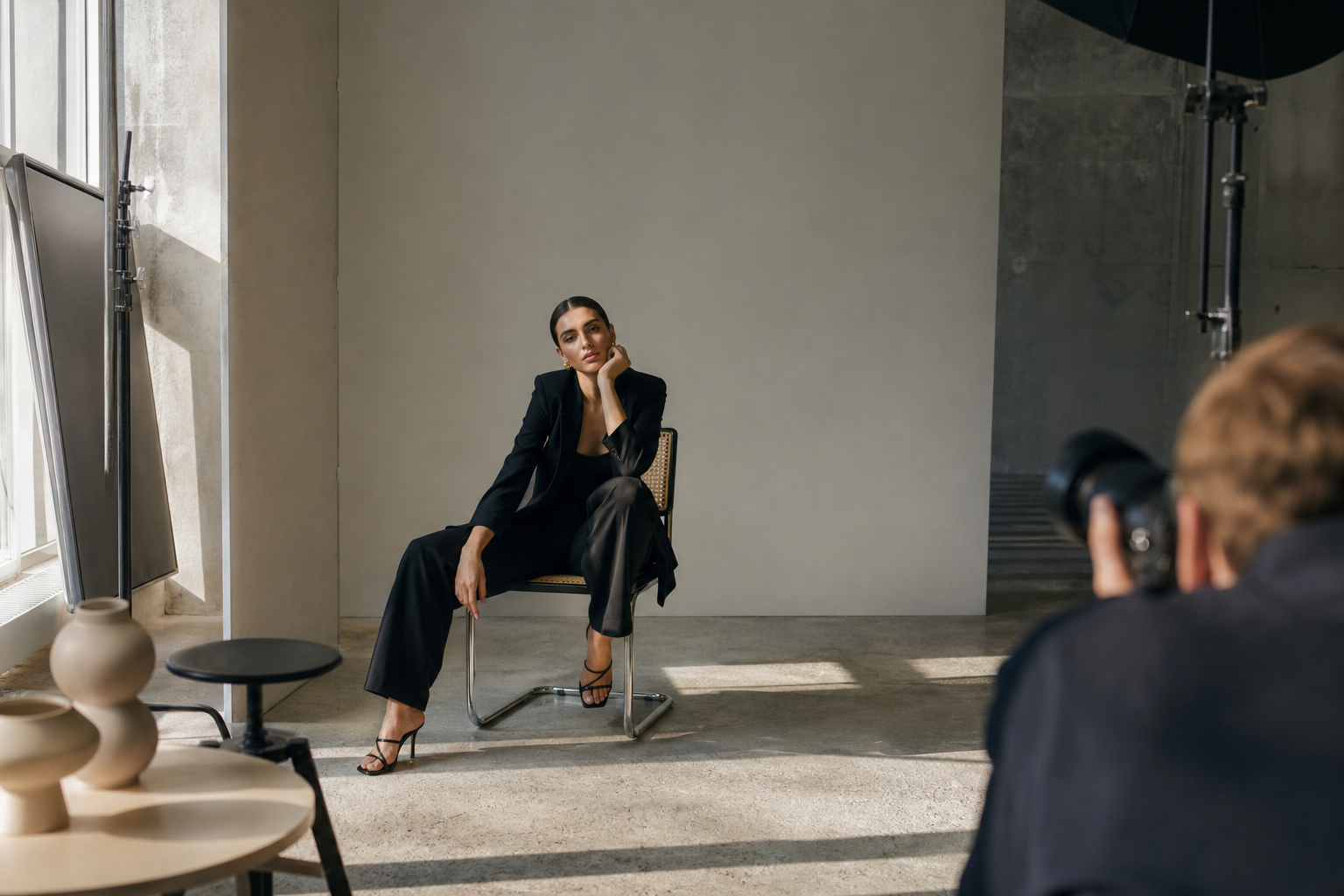
Editorial style visuals are narrative-driven images and short videos where composition, lighting, styling, and mood work together to tell a story rather than simply show a product. A clear definition and visual guide explains that in editorial work every compositional choice supports a story, making the imagery feel intentional and immersive What Is Editorial Photography Style? A Visual Guide. Below are seven specific visual techniques you can brief, commission, or produce in-house, along with practical production notes and a hiring checklist to help your campaign or brand content look and behave like a magazine feature.
When editorial style visuals are the right choice
When you want premium positioning and depth
Choose an editorial aesthetic when your goal is to elevate perceived value, communicate a point of view, or present a product or person as part of a wider story. Editorial images work best when designers can use a collection of shots to create a consistent mood, rather than a single polished product image How To Find Stock Photos With An Editorial Aesthetic. They are ideal for seasonal launches, lookbooks, founder portraits, and campaign features.
When commercial photos or lifestyle shots are a better match
If you only need isolated product shots for ecommerce, or high-volume lifestyle images with broad-demo appeal, a more direct commercial or product photography approach may be faster and cheaper. Editorial visuals trade speed and cost efficiency for nuance and long-term brand value.
How to decide for short campaigns versus ongoing brand content
Use editorial style visuals for campaigns that need a strong narrative or a premium refresh. For ongoing social content, plan recurring editorial shoots so you build a consistent collection rather than one-off images.
Seven production choices that create editorial style visuals
1. Narrative framing and composed negative space
What it is and why it matters: Editorial framing purposefully places the subject within a scene, using tight crops, off-center placement, or generous negative space to create tension and emphasis. Composition is never neutral in editorial portraits; choices about crop and placement communicate role and emotion What Makes a Photo Look Editorial?.
What to brief: specify whether images should feel intimate or distanced, and include three to five reference frames. Lens and crop: use 35mm to 85mm for portraits, and vary between tight headshots and wider contextual frames. Sample shot list: close portrait, three-quarter environmental portrait, subject-in-context with space for text. Deliverables: high-res horizontal and vertical crops, plus a RAW or full-res TIFF for designers.
2. Cinematic lighting and motivated sources
What it is and why it matters: Editorial lighting looks motivated, as if the light belongs in the scene. That can be a single soft window light, a practical lamp, or directional hard light that sculpts the face. Motivated, cinematic lighting creates depth and mood and avoids flat, evenly lit catalog looks ImageStudio guide.
What to brief: name the mood, for example moody, warm, or high-contrast. Production notes: bring a small kit for practicals, with one key, one fill, and a hair or rim light. Sample shot list: key-lit portrait, silhouette, rim-lit product detail. Deliverables: color-graded stills and ungraded masters, LUT or RAW file if requested, and short graded clips for video shoots.
3. Intentional styling and subdued palettes
What it is and why it matters: Editorial styling favors restrained, coherent palettes and textures that support the story. Typography and design often use warm neutrals and serif accents to extend the magazine feel into layouts and social posts Whitespace, Serifs, and Warm Neutrals. Styling decisions affect perceived product and brand quality.
What to brief: provide a palette, three outfit or prop options, and a priority list for brand colors to include or avoid. Production tips: limit bright color clashes, pick natural fabrics, and include texture to read in stills. Deliverables: styled flat-lay, product-with-model, and detail shots with consistent palette and retouching notes.
4. Layout-ready composition and typography-friendly space
What it is and why it matters: Editorial images are often placed in layouts, so leave room for type and margins. Designers value shots with predictable negative space and consistent edge tension so headlines and captions fit without awkward crops.
What to brief: request left or right negative space depending on layout, and provide the target aspect ratios. Production notes: shoot with safe areas for type, capture wider frames for flexible cropping, and deliver both horizontal and vertical masters. Deliverables: layered PSDs or high-res JPGs with guides when typography placement is required.
5. Set, props, and authentic context
What it is and why it matters: Props and locations should feel lived-in to make images believable. Editorial visuals are rarely sterile; they include context cues that anchor the subject to a story, such as a coffee cup, textured backdrop, or a window with imperfect light.
What to brief: list required props and acceptable substitutes, and provide reference images showing the desired level of authenticity. Production checklist: scout locations for motivated light, limit staged-looking props, and plan for minor environmental retouching. Deliverables: hero images plus detail shots of props and hands, which help editors create multipanel layouts.
6. Naturalistic motion and short-form video language
What it is and why it matters: For video, editorial style favors natural movement, handheld or slow dolly work, and short, cinematic moments rather than fast cuts. Think of micro-stories: a subject adjusts clothing, pours coffee, or gazes away. These moments translate well into social reels and embed into editorial pages.
What to brief: specify intended platforms and final durations. Camera and motion notes: shoot 24 or 25 frames per second for a cinematic look, capture three to six second vertical moments for Reels or Stories, and prioritize in-camera motion over heavy post effects. Deliverables: 9:16 vertical edits, 1:1 social cuts, and a few longer 16:9 cuts for websites.
7. Series and sequencing: shoot as a collection
What it is and why it matters: Editorial work is a set. Plan sequences and color consistency so images read together across a spread or social carousel. A successful editorial shoot behaves like a mini-portfolio with recurring motifs, color echoes, and composition rhythms.
What to brief: request a mood board and a page or feed mock where images will sit. Production notes: shoot scenes in blocks for consistent lighting, and capture alternates for each key moment to allow sequencing. Deliverables: curated galleries, a selection for carousel order, and caption-ready metadata for each image.
How to brief and hire a creator for editorial style visuals
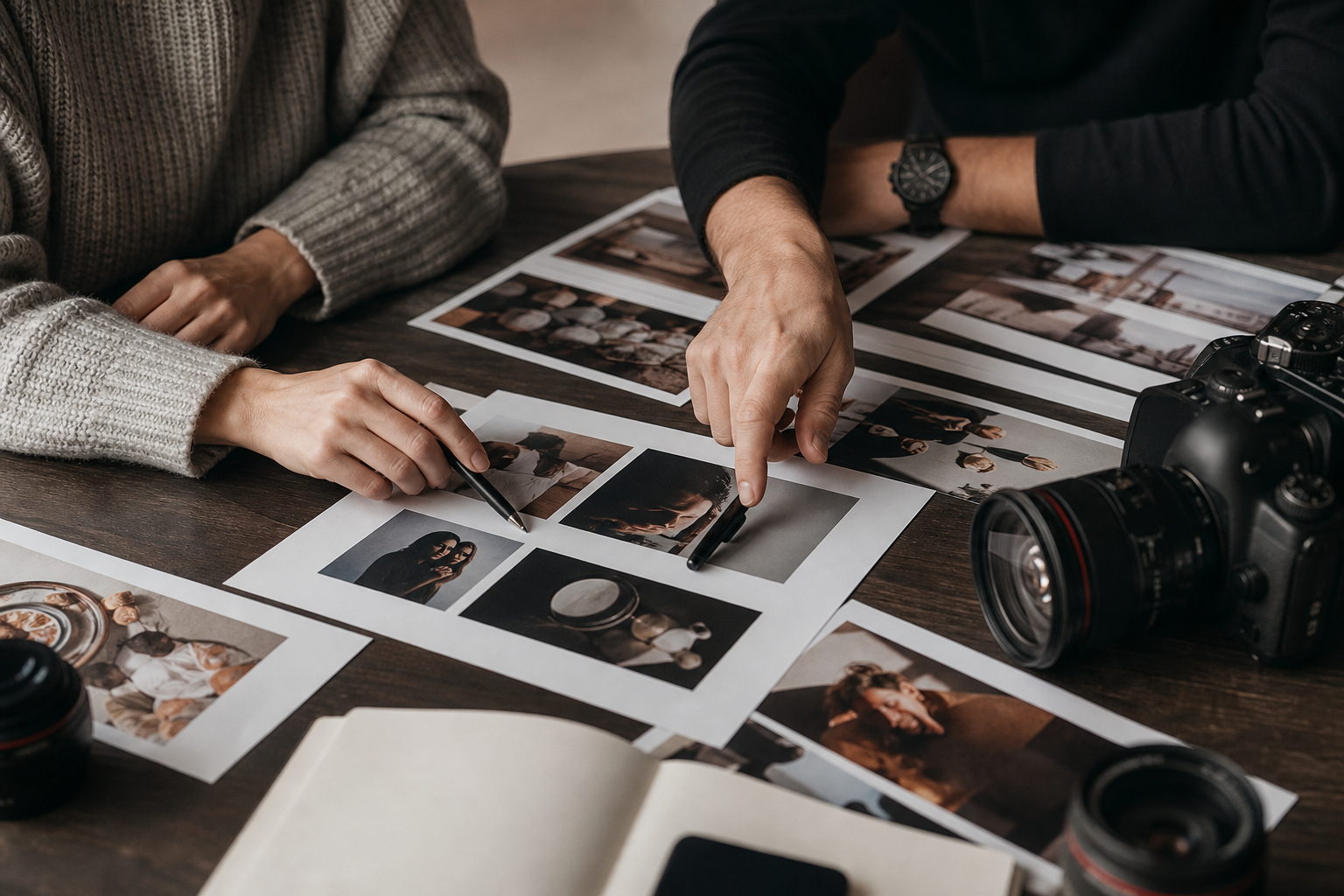
Use a concise brief that covers creative intent, technical requirements, and legal usage. Below is a copyable checklist you can include in an RFP or creative brief.
- Creative intent: one-sentence concept, three reference images, and the intended narrative.
- Deliverables and formats: high-res JPGs and TIFFs, RAWs on request, vertical and horizontal crops, short MP4s in 9:16 and 16:9, and color-graded masters.
- Aspect ratios and sizes: desktop hero 16:9, Instagram 1:1, Stories/Reels 9:16, with specific pixel sizes if needed.
- Color and retouching: required color palette, degree of retouch, and whether a LUT or graded video is required.
- Usage and licensing: specify duration, territories, and exclusivity. Ask for written licensing terms upfront.
- Sample shot list and mood board: five must-have images plus five aspirational frames.
- Timeline and approvals: initial mood approval, first edit delivery, two rounds of revisions, and final delivery date.
- Test or pre-proposal: request one paid test image or a short concept reel for complex briefs.
For portfolio references and an example of how a studio frames work, see this internal portfolio example from Scene Stealers' Creations blog post4. If you plan to review stock alternatives first, note that editorial aesthetics are often sold as collections rather than single images Kaboompics on editorial stock.
Stock images, commissioned shoots, or repurposed UGC: how to choose
Decision criteria: authenticity, scale, cost, rights control, timeline, and brand consistency. Use commissioned shoots when you need exclusivity, consistent storytelling, and full control. Use high-quality curated stock collections when time and budget are constrained and you need quick visual cohesion. Use repurposed UGC when authenticity and community voice outweigh polished editorial control.
Quick decision flow: if you need exclusive, brand-specific storytelling, commission. If you need immediate assets for low-budget campaigns, curate editorial-style stock collections. If your audience prefers real customers and rapid scaling, consider guided UGC with a small editorial retouch. For help assembling the right mix, refer to the stock-to-commission comparison in the brief above and sample portfolios like the one at blog post4.
How to scale editorial style visuals for social media
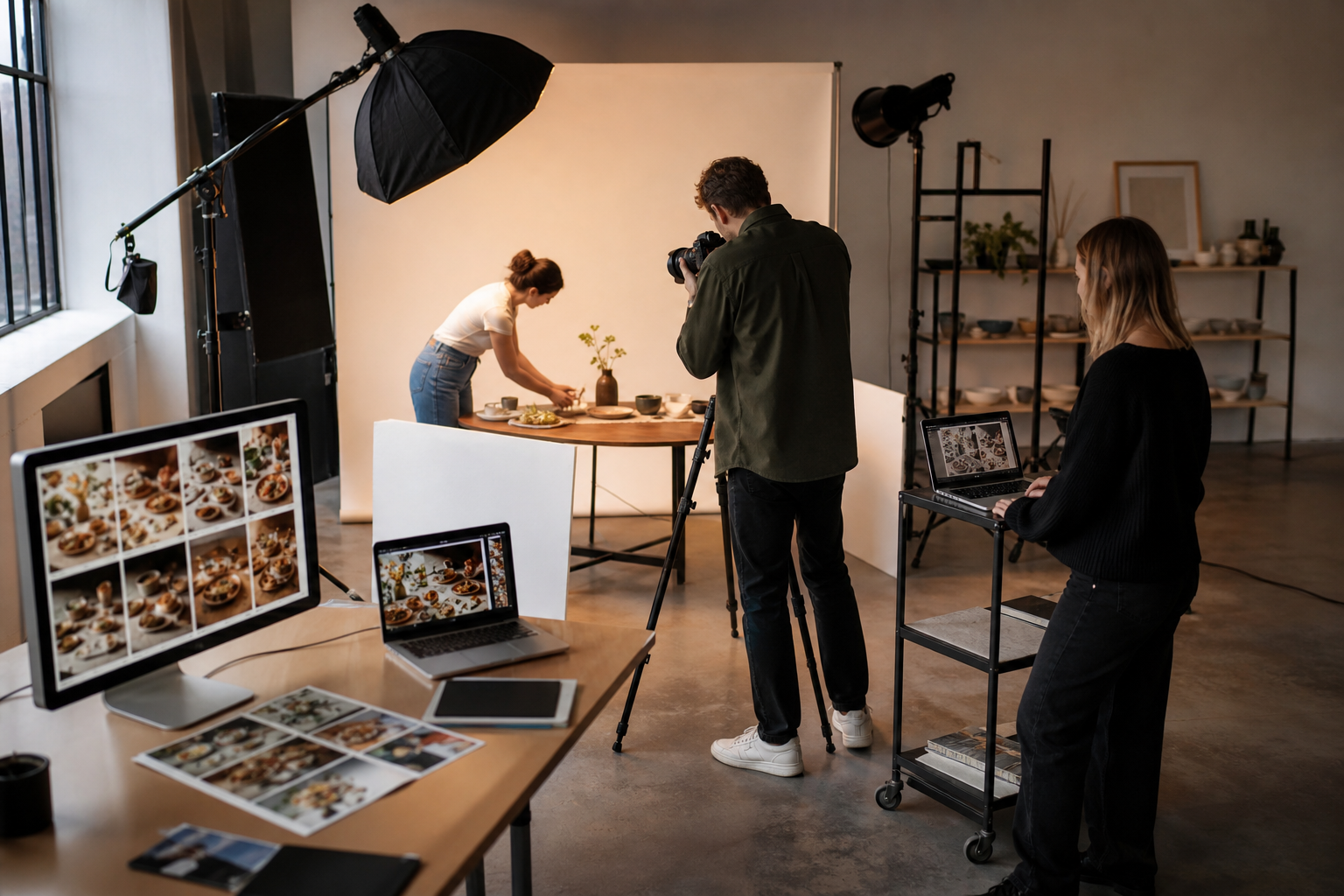
Shoot with multiple outputs in mind, and plan vertical-first moments within editorial compositions. Practical tactics: capture both wide and tight frames for cropping, record short vertical clips while shooting stills, and create template captions and layouts that reuse the same type treatment and palette across posts. Treat each shoot as a library: tag assets by palette, subject, and sequence so editors can assemble carousels and reels quickly. For consistent brand language, maintain a small set of typography and color rules inspired by editorial design principles ArtTree pillars.
Red flags when selecting a creator and local SEO actions to find the right studio
Portfolio and contract warning signs
Watch for portfolios that show only single images without a cohesive shoot feel, or inconsistent color and lighting across presumed "series." In contracts, beware of vague licensing clauses that do not state duration, territory, or exclusivity. Ask for sample deliverables and a clear usage schedule before signing.
Local SEO steps for finding or promoting a studio
When you search locally, studios with clear location metadata rank more reliably. For example, Scene Stealers' Creations currently shows a business website and phone, but its public business profile recommends adding city, state, and country to improve local discovery. See Scene Stealers' Creations for contact details and to confirm local coverage Scene Stealers' Creations. Recommended website fixes include adding a city landing page, LocalBusiness schema, and explicit address or service area so clients can find you by location.
Frequently asked questions
What should you include in a brief for editorial style visuals?
Include one-sentence creative intent, three reference images, a prioritized shot list, palette and styling notes, required aspect ratios, deliverable specs, licensing terms, and timeline with review milestones.
How much time does a small editorial shoot typically take from briefing to final files?
Timelines vary by scope, but expect an initial concept and mood approval to take a few days, a one-day shoot for a small team, and one to three weeks for editing and final delivery. Always agree timing and revision rounds in the brief so expectations match reality.
Can editorial style visuals be created on a limited budget and what changes are required?
Yes. Reduce scope by limiting location moves, using fewer outfits or props, prioritizing in-camera lighting over elaborate setups, and capturing vertical moments during the stills shoot to avoid separate video days. Consider a focused shoot-as-collection approach to maximize usable frames.
Do editorial style visuals require special licensing compared with product photos?
Licensing should be explicit. Editorial images used commercially or exclusively will often need broader rights than images used for editorial coverage. Always request written terms for duration, territory, exclusivity, and platform use, and ensure model releases are included if people appear.
How do you measure whether editorial style visuals are performing for a social campaign?
Track engagement metrics such as reach, saves, and video completion rates, and compare on-message metrics like brand lift or qualitative feedback from target audiences. Use A/B tests with a commercial image versus an editorial image to isolate impact on clicks and conversions.
Ready to plan your next editorial shoot? Visit Scene Stealers' Creations or call +1 250 200 0606 to discuss a brief or request portfolio examples at blog post4?